Core publications
The publications below reflect serious work in anti-corruption, governance, internal control, and decision-making. They are designed to support disciplined learning, stronger judgment, and deeper professional awareness in areas where weak thinking often produces real institutional damage.
CACM Review Textbook
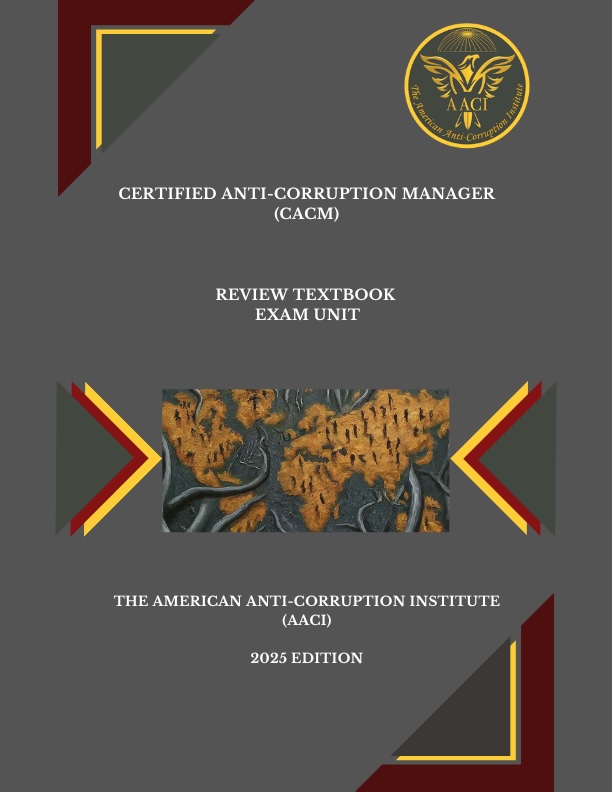
Authorship and publishing: By Mike Masoud and published by the Exam Unit of The American Anti-Corruption Institute (AACI).
The CACM Review Textbook is a professional review textbook developed to support advanced study in anti-corruption, governance, internal control, fraud and corruption risk, whistleblowing, management judgment, and global anti-corruption commitments. It is intended for serious professionals and decision-makers who need more than surface-level compliance language.
Who it is for: Board members, executive management, compliance leaders, auditors, investigators, governance professionals, and serious candidates pursuing the Certified Anti-Corruption Manager (CACM) path.
Why it matters: Corruption survives where weak judgment, weak oversight, and weak internal control are tolerated. This textbook addresses that failure directly and supports a deeper understanding of how institutional exposure is created and sustained.
CACF Review Textbook
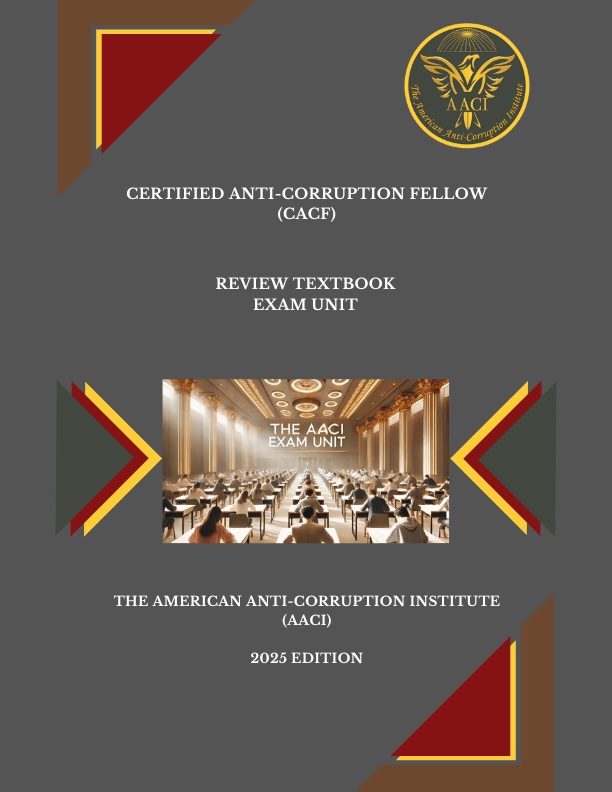
Authorship and publishing: By Mike Masoud and published by the Exam Unit of The American Anti-Corruption Institute (AACI).
The CACF Review Textbook is a foundational review textbook designed to build structured anti-corruption understanding for emerging professionals, university-level learners, and stakeholders seeking disciplined exposure to corruption prevention, integrity, governance, and accountability. It helps readers move beyond abstract ethics language and toward practical institutional awareness.
Who it is for: University-level learners, early-career professionals, aspiring anti-corruption practitioners, and stakeholders seeking a structured entry point into corruption prevention and institutional integrity.
Why it matters: Most institutions wait too long to build anti-corruption competence. By then, poor assumptions and weak habits are already embedded in culture and decision-making. Foundational education is where real prevention begins.
Why these publications matter
Anti-corruption competence must be built, not assumed. Institutions pay dearly when they rely on appearances, titles, or ceremonial compliance instead of informed judgment, real accountability, and measurable understanding.